
 返回学校首页

 News
News
CUGB Hosts 2025 Annual Academic Committee Meeting and Development Strategy Symposium for DDE Frontiers Science Center
2026-01-12 Author: Views:24
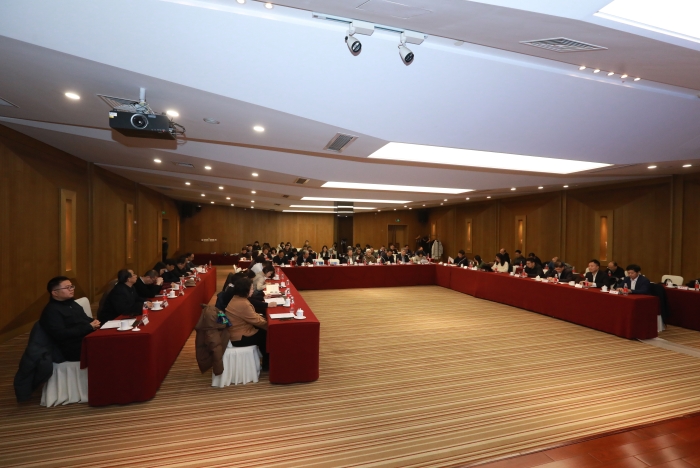
On 25 December, China University of Geosciences (Beijing) (CUGB) hosted the 2025 Annual Academic Committee Meeting and Development Strategy Symposium for its Ministry of Education (MOE)-accredited Frontiers Science Center for Deep-Time Digital Earth (DDE Frontiers Science Center). Professor Zhidan Zhao, President of CUGB, attended and delivered the opening address. Tongzhen Fang, Deputy Director of the International Cooperation Center of the Ministry of Science and Technology (MOST), and Yuanming Zheng, Director of Division II, Department of Earth Sciences at the National Natural Science Foundation of China (NSFC), addressed the meeting. Also in attendance were officials from the Ministry of Natural Resources (MNR) and MOST, including Yunjie Chen and Sisi Wang.
The symposium brought together top geoscience experts and academic leaders, including Academician Qiuming Cheng (Chief Scientist and Director of the Center), Academician Timothy Kusky, and Researcher Guangsheng Yan, members of the Academic Committee; Academician Xuanxue Mo of CUGB; as well as representatives from Zhejiang University, China University of Geosciences (Wuhan), and other partner institutions.
Professor Dameng Liu, Vice President of CUGB, chaired the opening ceremony, while Academician Chenghu Zhou presided over the research presentation and discussion session. Academician Cheng presented the center’s annual work report.
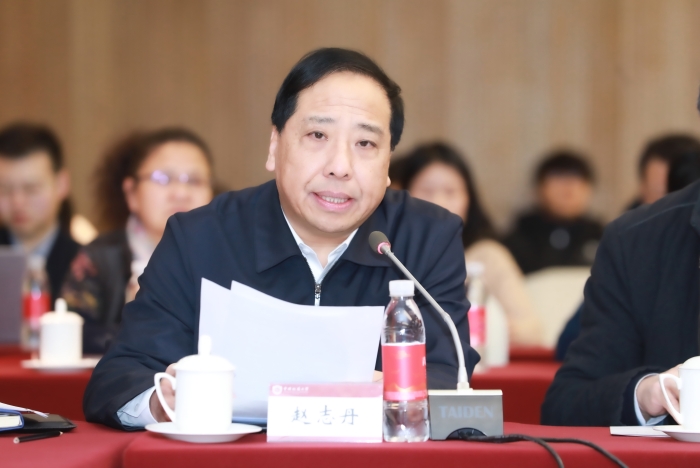
In his opening remarks, Professor Zhao expressed sincere gratitude to regulatory authorities, academicians, and experts for their long-term support for CUGB’s development. He noted that since its MOE accreditation, the DDE Frontiers Science Center has upheld the vision of China’s “Everest Project” for basic research in higher education. Leveraging CUGB’s core strengths in deep-time Earth system science, the center has provided critical support to the Deep-Time Digital Earth (DDE) International Big Science Programme.
Focused on the formation and evolution of a habitable Earth, the center addresses frontier scientific questions including the co-evolution of life, environment and matter in the deep-time Earth, as well as extreme geological events. Through in-depth interdisciplinary integration, the center has achieved groundbreaking breakthroughs, delivered a series of original research outcomes, and made robust progress in talent development and project delivery. Multiple researchers from the center have received national-level talent titles, secured funding for major research projects, and won prestigious national and international awards.
Professor Zhao called on participating experts to share insights and recommendations, to help conduct a comprehensive review of the center’s development progress, shape its future roadmap, and build it into a world-leading research platform serving China’s national strategic priorities.
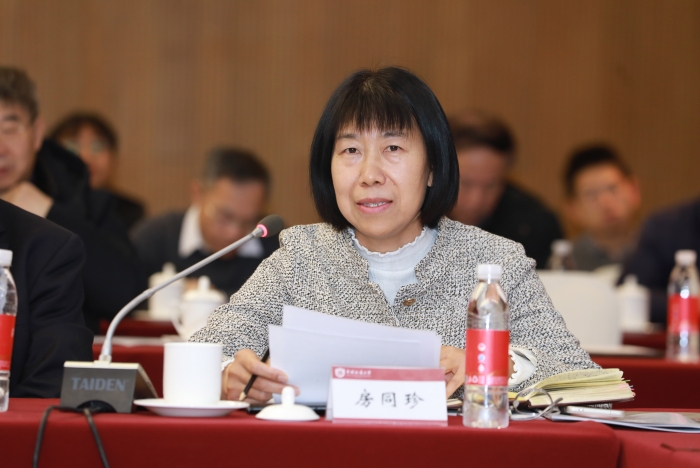
Ms. Fang noted that the MOST International Cooperation Center has long followed and supported the development of the DDE Frontiers Science Center, and acknowledged the center’s pivotal role in advancing the DDE Programme and its contributions to deep-time digital Earth innovation. She updated attendees on the latest progress of the DDE Programme, emphasizing that the initiative should continue to lead as an initiator of global geoscience collaboration, expand partnerships with top international research institutions, build a high-level academic exchange platform, and attract more overseas scientists to participate. She added that CUGB should further leverage its disciplinary strengths, strengthen talent pipeline development, expand international cooperation, and make new breakthroughs to enhance China’s innovation capacity and global influence in geosciences.
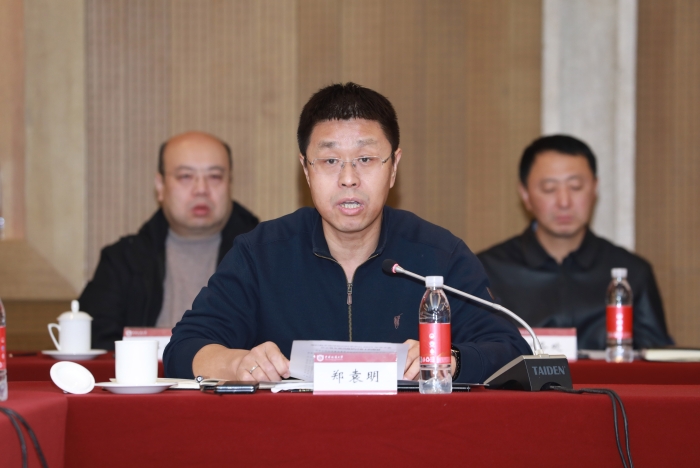
In his remarks, Mr. Zheng highlighted that the current period marks the transition between the conclusion of China’s 14th Five-Year Plan and the start of the 15th Five-Year Plan. Advancing data-driven Earth system science research, he noted, is not only critical for China’s geosciences to reach the global frontier, but also a key opportunity for Chinese scientists to seize the historic opportunity of the global geoscience tech revolution.
He expressed hope that CUGB will fully implement the national strategic directives on strengthening basic research and achieving high-level sci-tech self-reliance, optimize its disciplinary layout, deepen the integration of artificial intelligence and geosciences, and produce more original theories and methodologies with global influence. He also called on the university to leverage its national platforms and international cooperation networks to build a high-level talent hub, and cultivate cross-disciplinary research and management teams with global vision and strategic capabilities.
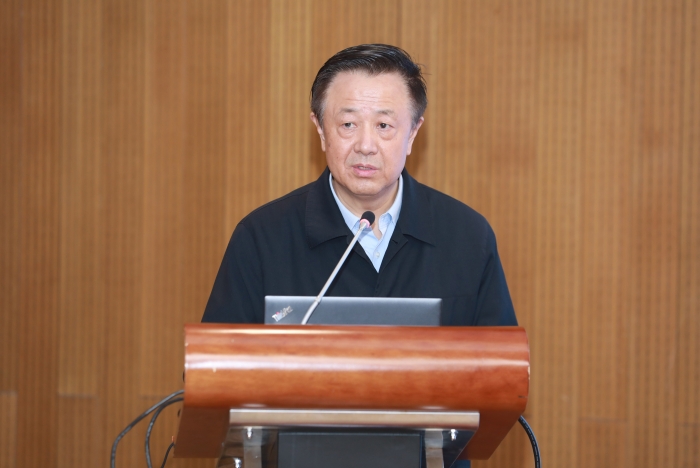
Academician Qiuming Cheng presented the center’s 2025 development achievements, covering its core mandate and implementation framework, progress and existing challenges, and upcoming work plan. He explained that the center focuses on major extreme geological events and the co-evolution of life, environment and matter in the deep-time Earth. In 2025, the center delivered innovative advances across five key research areas:
1. Deep-time paleogeographic evolution and deep Earth processes
2. Deep-time life and environmental evolution
3. Deep-time paleoclimatic evolution
4. Deep-time Earth material evolution and resource effects
5. Deep-time big data and simulation/forecasting of extreme geological events
The center operates with standardized governance, has strengthened domestic and international joint research, advanced interdisciplinary talent training, and engaged in in-depth global academic exchanges. It has played a leading role in addressing major global geoscience challenges and advancing the United Nations Sustainable Development Goals (SDGs), provided robust support to the DDE Programme, and driven the paradigm shift of data-driven geoscience research centered on big data and artificial intelligence.
With the strong support of CUGB, Academician Cheng noted, the center will pool interdisciplinary strengths and high-quality innovation resources, leverage its core role in talent development, scientific research, disciplinary advancement and international cooperation, and strive to become a world-class geoscience research platform and innovation hub.
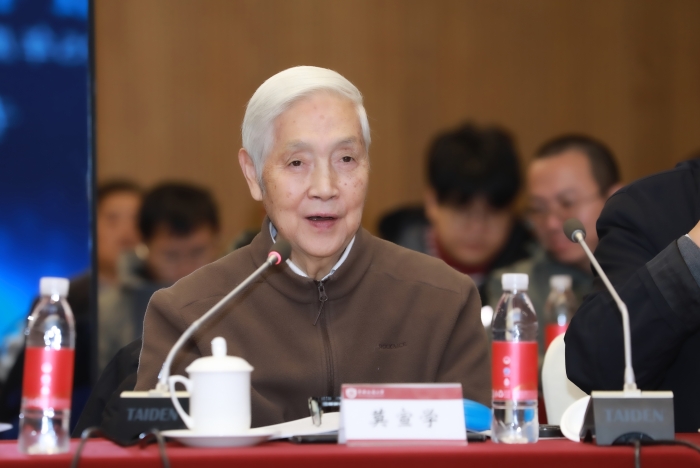
Academician Mo Xuanxue gives an address
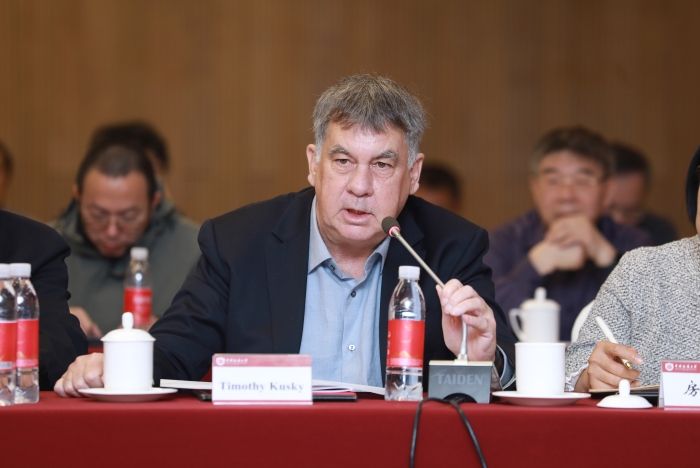
Academician Timothy Kusky gives an address
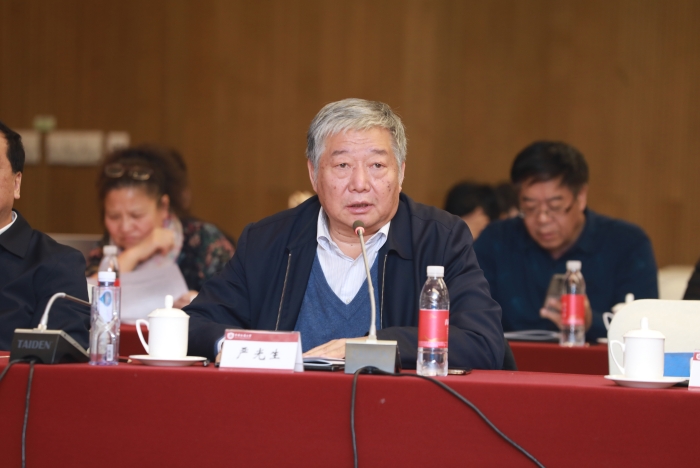
Researcher Yan Guangsheng gives an address
Participating experts put forward constructive recommendations on the center’s strategic development, focusing on refining research priorities, advancing interdisciplinary integration, strengthening technical capacity building, and expanding international cooperation.
Heads of relevant administrative and academic departments of CUGB, as well as core research members of the DDE Frontiers Science Center, attended the meeting.

Location:No. 29, Xueyuan Road, Haidian District, Beijing
All rights reserved by China University of Geosciences (Beijing)

LLocation:No. 29, Xueyuan Road, Haidian District, Beijing
Technical support: Information Network and Data Center
Official account
@Copyright: China University of Geosciences (Beijing)
