
 返回学校首页

 News
News
Academician Cheng Qiuming of CUGB Attended the 20th China Economic Forum and was Interviewed by Media
2025-11-25 Author:【深时数字地球前沿科学中心】 Views:0
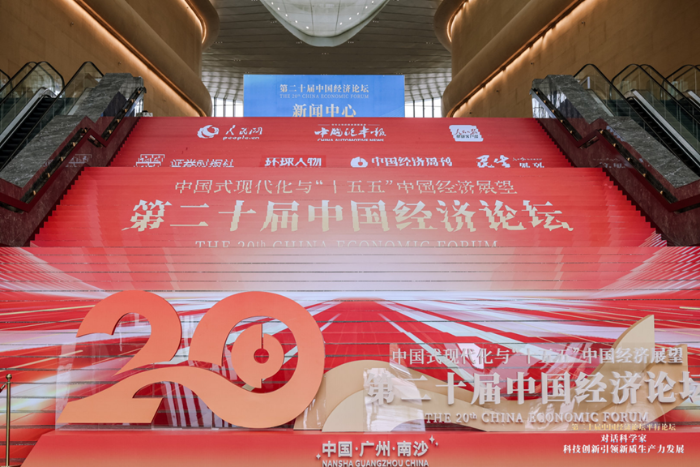
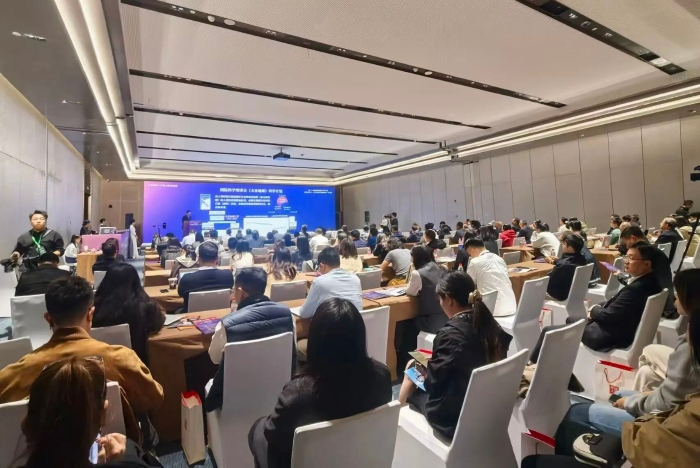
On November 18, the 20th China Economic Forum was held in Nansha, Guangzhou. Themed "Chinese Modernization and China's Economic Outlook for the 15th Five-Year Plan," the forum brought together experts and scholars from various sectors to jointly contribute insights and suggestions for China's high-quality development during the "15th Five-Year Plan" period. Academician Cheng Qiuming—Professor at the China University of Geosciences (Beijing), Academician of the Chinese Academy of Sciences (CAS), Head of the Expert Group of the "Deep-time Digital Earth (DDE)" International Big Science Program, and Chair of the Executive Committee—was invited to attend. He delivered a keynote speech at the parallel forum titled "Dialogue with Scientists—Tech Innovation Leading the Development of New Quality Productive Forces," garnering significant coverage from multiple mainstream media outlets, including People's Daily, Global People, and Guangzhou News.
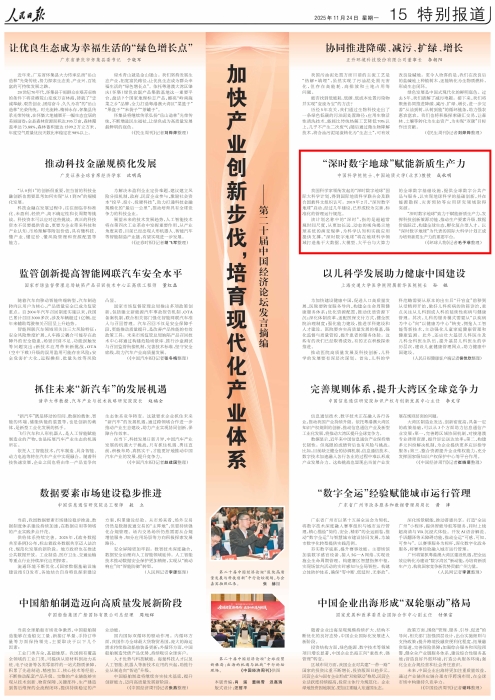
People's Daily published the views of Academician Cheng Qiuming in an article titled "'Deep-time Digital Earth' Empowering New Quality Productive Forces." The report noted that the "Deep-time Digital Earth" (DDE) international big science program, spearheaded by Chinese scientists, has gained recognition from the International Union of Geological Sciences (IUGS) and UNESCO. Since its launch in February 2019, the DDE program has, through several years of development, established a comprehensive and standardized framework for management and operations. The term "Deep-time" in the program's name refers to transcending conventional time scales to reveal the evolutionary patterns of the Earth system from a more long-term and dynamic perspective, providing a foundation for both scientific understanding and practical applications. DDE aims to build a global digital infrastructure within the field of geosciences powered by big data, large models, big platforms, and massive computing power. It provides global digital public goods and services to achieve fundamental innovations in Earth sciences and secure breakthroughs in applied research areas such as energy exploration and disaster prevention. Furthermore, DDE is dedicated to empowering new quality productive forces by serving as a source for technological innovation. It drives the upgrading of production factors, facilitates the leap in data value, builds a global ecosystem, and cultivates versatile, multi-disciplinary talents. International big science programs, represented by "Deep-time Digital Earth," are becoming vital platforms for fostering new quality productive forces.
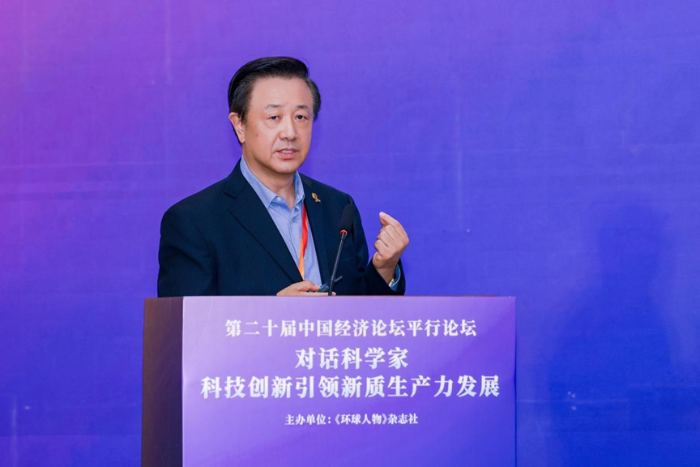
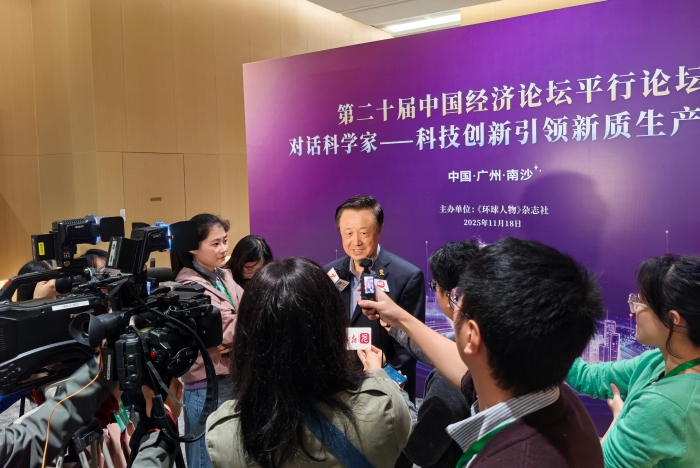
Academician Cheng Qiuming stated at the forum that the Deep-time Digital Earth (DDE) program is the first international big science program spearheaded by Chinese scientists, recognized by the International Union of Geological Sciences (IUGS) and UNESCO, and formally approved by the Chinese government. "Deep-time" refers to time scales that transcend conventional human perception, aiming to reveal the evolutionary patterns of the Earth system from a more long-term and dynamic perspective, thereby providing a foundation for scientific understanding and practical applications. For instance, to understand the causes of global warming over the past century, the timeframe must be extended back 800,000 years to systematically analyze multiple warming episodes in Earth's history, allowing for the distinction between natural cycles and the impacts of human activity. He emphasized that the DDE program empowers "new quality productive forces" through three primary pathways: first, serving as a source of technological innovation to drive technical breakthroughs; second, upgrading production factors and facilitating a leap in data value; and third, building a global ecosystem to cultivate multi-disciplinary talents. These insights were covered in a report by Global People.
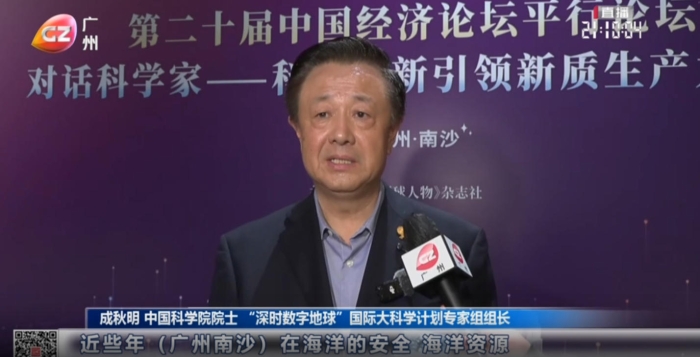
In an interview with Guangzhou News, Academician Cheng Qiuming highly commended the progress Nansha has made in the field of marine science and technology. He stated, "In recent years, (Nansha, Guangzhou) has made rapid progress in maritime security and marine resources, including fisheries. I believe there are still many opportunities, and prospects remain very promising for areas such as non-traditional energy. Through technological innovation and our joint efforts, we will certainly provide significant developmental support to the local area."

Location:No. 29, Xueyuan Road, Haidian District, Beijing
All rights reserved by China University of Geosciences (Beijing)

LLocation:No. 29, Xueyuan Road, Haidian District, Beijing
Technical support: Information Network and Data Center
Official account
@Copyright: China University of Geosciences (Beijing)
